


Moving a loved one into assisted living is both a practical decision and an emotional one. You’ve likely been balancing safety concerns, daily support needs, and the desire to preserve routines and independence. It’s a stressful time, but with the right preparation, this transition can feel calmer and more manageable for everyone involved.
Thoughtful planning helps reduce stress before, during, and after the move. From recognizing when extra support is needed to preparing belongings and paperwork, taking a steady, organized approach allows families to focus on what matters most: your loved one’s comfort, dignity, and peace of mind.
Key Takeaways
- Assisted living provides daily support with personal care, meals, and medication while allowing older adults to maintain independence and personal routines.
- Gradual changes in daily life, such as safety concerns, missed medications, or social withdrawal, can signal that assisted living may be beneficial.
- Early, open conversations help families approach the decision collaboratively and reduce emotional pressure.
- Downsizing works best when done slowly, focusing on meaningful items that provide comfort and familiarity.
- Familiar belongings and everyday essentials help new living spaces feel comfortable and support smoother adjustment.
What You Need to Know About Assisted Living
Assisted living offers a supportive environment for older adults who need help with daily activities. It’s not about round-the-clock medical care—this lifestyle offers support with bathing, dressing, medication management, and meals while residents maintain control over their schedules and preferences.
Life in assisted living also emphasizes connection and engagement. Communities provide opportunities for social interaction, shared dining, and organized activities that support both physical and emotional well-being. This balance of support and autonomy allows residents to continue living with purpose while having help readily available.
Signs It May Be Time for Assisted Living
Changes in daily life are often gradual, which can make it difficult for families to recognize when additional support may be helpful. You’ll likely notice:
- Difficulty managing daily tasks such as cooking, cleaning, or personal care
- Missed medications, incorrect dosages, or confusion around schedules
- Increased safety concerns, including falls, wandering, or leaving appliances on
- Noticeable withdrawal from hobbies, social activities, or regular routines
- Growing challenges with mobility, balance, or navigating the home safely
When several of these signs appear consistently, assisted living can provide the structure, support, and connection needed
How to Prepare for the Move to Assisted Living
Preparing for a move to assisted living works best when it is approached gradually. The more time you give yourself, the easier this becomes.
Start the Conversation Early
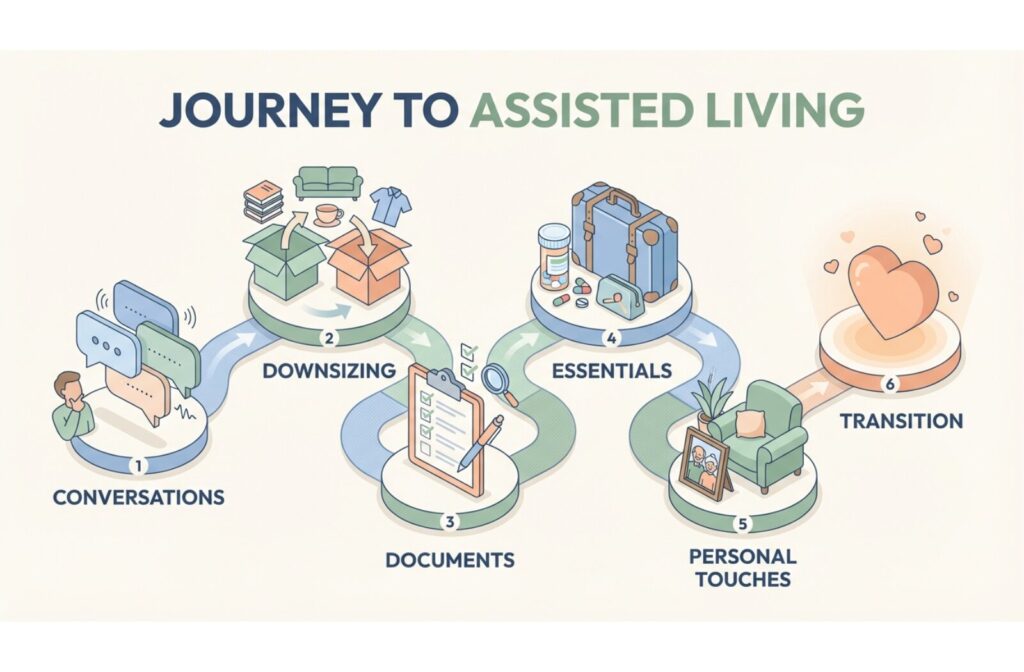
Opening the conversation early gives everyone time to process the idea without pressure. Focus on comfort, safety, and quality of life rather than limitations or losses. Sharing observations calmly and listening to concerns helps build trust and understanding. These early discussions lay the groundwork for shared decision-making.
Downsize with Care and Thoughtfulness
Downsizing can be emotionally demanding, especially when personal belongings hold strong memories. You’ll want to take things slow here. Working one room at a time keeps the process manageable and prevents your family from feeling overwhelmed.
Organize Important Documents
Having paperwork organized ahead of time simplifies the move-in process. Medical records, medication lists, insurance cards, and physician contact information should be gathered and kept accessible. Legal documents such as advance directives, power of attorney paperwork, and emergency contacts are equally important.
Plan the Logistics Ahead of Time
Coordinating logistics helps the move day run more smoothly. This includes confirming the move-in date, arranging transportation, and understanding access procedures at the community. Planning these details in advance prevents confusion and rushed decisions as you get closer to the official moving day.
Your Complete Move-In Checklist
Bringing the right mix of essentials and personal items allows a new apartment to feel comfortable without feeling cluttered.
Personal Care and Comfort Items
Comfortable clothing suited for daily activities and seasonal weather is essential. Favorite toiletries and grooming items help maintain familiar routines. Including sleepwear, slippers, and everyday basics supports comfort from the first night.
Items That Make a Space Feel Like Home
Personal touches help transform a new apartment into a welcoming space. Family photos, artwork, and small decorative items add warmth and personality. A favorite chair, lamp, or side table can provide both comfort and familiarity if space allows, as these items help anchor daily routines.
Health and Medication Needs
Medical devices, mobility aids, and hearing or vision equipment should be packed together and clearly labeled. Having these items available prevents gaps in daily routines.
Entertainment and Hobby Materials
Books, puzzles, music, or craft supplies offer quiet enjoyment and relaxation during the adjustment period. Hobby materials can also encourage participation in group activities and shared interests. These items help fill free time in meaningful ways.
Important Daily Living Accessories
Small everyday items often make the biggest difference. Glasses, watches, labeled clothing, and mobility aids support daily independence. Keeping these essentials accessible helps your loved one maintain their routine during this change in their life.
Finding the Right Community for Your Family
Moving into assisted living is a significant transition, but thoughtful preparation can make the experience more positive and reassuring. When families plan ahead, communicate openly, and focus on comfort and familiarity, the process becomes less overwhelming and more supportive.
Fortunately, your family isn’t alone. Here at Peregrine Senior Living at Delmar Place, you can find an environment that honors your loved one’s past while still providing the support they need. Schedule a tour with us today, and come discover a life full of clarity, confidence, and peace of mind for your family.










At the heart of Peregrine Senior Living is a philosophy that changes everything: The Peregrine Way.
It’s an approach that goes beyond care to celebrate the whole person: mind, body, and spirit.
Through lifelong learning, creative engagement, and compassionate support, we empower residents to continue discovering, growing, and finding purpose every day.
Because true care isn’t just about living well, it’s about living fully.
peregrinedelmarplace.com/ ... See MoreSee Less
0 CommentsComment on Facebook
Spring is here! It’s a season of renewal, color, and hope.
Our residents are embracing the warmer days ahead with outdoor walks, seasonal crafts, and time spent in nature’s beauty.
As the world blooms around us, we’re reminded that every new season brings new opportunities to grow, connect, and find joy in simple moments. 🌷
peregrinedelmarplace.com/ ... See MoreSee Less
0 CommentsComment on Facebook
Thank you Gail for a wonderful presentation on genealogy. Gail has been researching her family for years and has information dated back to the 1600’s. ... See MoreSee Less
1 CommentsComment on Facebook
Siena basketball watch party tomorrow! Go Saints! ... See MoreSee Less
0 CommentsComment on Facebook
Happy St. Patrick’s Day!☘️ ... See MoreSee Less
0 CommentsComment on Facebook
Good nutrition is the foundation of good living. 🥘
During National Nutrition Month, we’re celebrating the power of healthy eating to fuel energy, happiness, and well-being. 🍃
Our culinary team focuses on fresh ingredients, balanced menus, and mindful dining experiences that bring people together.
Because when we nourish our bodies, we also nourish our spirits.
peregrinedelmarplace.com/ ... See MoreSee Less
0 CommentsComment on Facebook
Every day is an opportunity to connect, celebrate, and find joy together.
Our team plans experiences that reflect residents’ interests and passions, from creative art workshops to themed socials and community outings.
These moments of laughter, learning, and togetherness remind us that life is meant to be lived fully and shared freely.
peregrinedelmarplace.com/ ... See MoreSee Less
0 CommentsComment on Facebook