

Key Takeaways
- Good nutrition supports daily energy, mood, and overall comfort for older adults in senior living.
- Shared mealtimes strengthen social bonds and give residents something to look forward to each day.
- Assisted living dining programs are personalized to each resident’s needs and preferences.
- Respite and short-term care residents receive the same warm, attentive dining support.
- Knowing what to look for in a dining program can help you make a confident choice for your loved one.
Why Dining Programs Matter in Senior Care
When you’re looking into assisted living for someone you love, you’re probably thinking about safety, support, and comfort. What often gets overlooked is how much daily meals shape the quality of life a resident experiences. Food isn’t just fuel. It’s routine, connection, comfort, and joy all sitting together at one table.
A thoughtful dining program supports far more than nutrition. It shapes how a resident feels physically, emotionally, and socially each day. From the warmth of a familiar dining room to the simple pleasure of a hot, home-style meal, the right dining experience can make a senior living community feel like home from the very first bite.
The Role of Nutrition in Senior Well-Being
As the body changes with age, nutritional needs shift too. Older adults often need more of certain vitamins and minerals while managing shifts in appetite or digestion. A well-designed dining program takes all of this into account, offering balanced meals that support steady energy, a positive mood, and daily comfort. Nutritional needs change with age, which is why the right food choices matter.
Thoughtful menus go beyond just covering the basics. They’re crafted to address the nutritional needs that naturally arise with age, without making mealtimes feel clinical or restrictive. Your loved one gets to enjoy genuinely satisfying food that also benefits how they feel throughout the day.
More Than a Meal: The Social Side of Dining
Shared Tables, Stronger Bonds
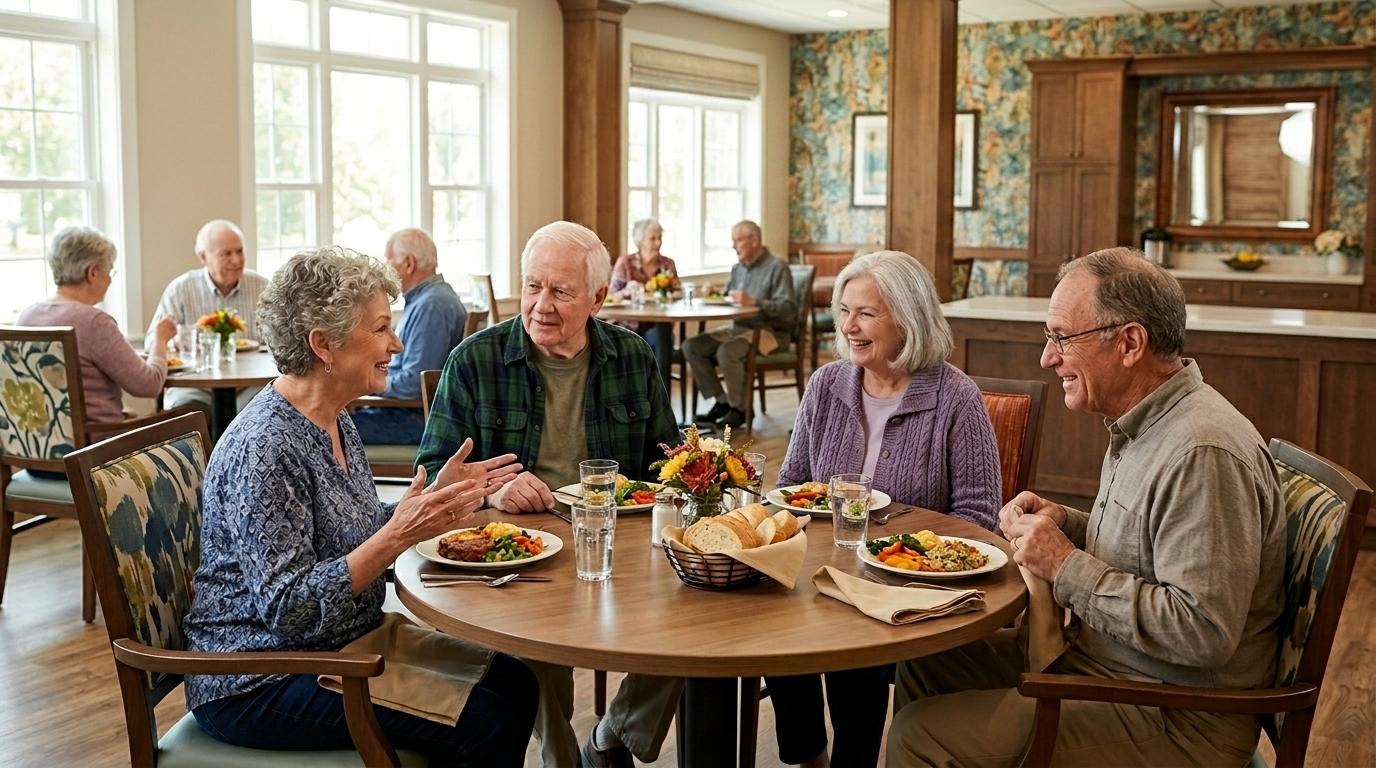
There’s something about sitting down together over a good meal that brings people closer. In assisted living, the dining room becomes one of the most social spaces in the community. Residents gather, share stories, and enjoy the kind of easy conversation that makes a place feel alive and welcoming.
For many residents, these shared mealtimes become a highlight of the day. Laughter, friendly chatter, and familiar faces across the table add a layer of connection that goes well beyond the food itself. Over time, those daily moments build real friendships and a genuine sense of belonging. You can read more about how residents build friendships in assisted living through shared moments like these.
Family at the Table
One of the most meaningful things you can do during a visit is sit down for a meal together. At Peregrine Senior Living at Delmar Place, families are warmly welcomed to join their loved ones in the dining room. Pulling up a chair and sharing a meal turns a regular visit into a relaxed, natural moment of togetherness.
That kind of shared experience deepens connection in a way that a quick visit to a room simply can’t. It gives families a chance to see their loved one thriving in a warm, social setting, and it gives residents a chance to show off a piece of daily life they genuinely enjoy. For more ideas on staying connected with your loved one in assisted living, there are plenty of ways to make each visit feel meaningful.
How Assisted Living Dining Programs Are Designed
Personalized to Each Resident
No two residents are exactly alike, and a good dining program reflects that. Meals are tailored to individual preferences, dietary needs, and personal tastes, so each resident feels considered rather than processed through a one-size-fits-all menu. Whether someone has specific dietary accommodations or simply prefers certain foods, that’s taken into account.
This kind of personalization goes a long way in helping residents feel respected and truly at home. Knowing that the people preparing their meals actually know who they are and care about what they like makes a quiet but meaningful difference every single day.
Restaurant-Style Dining
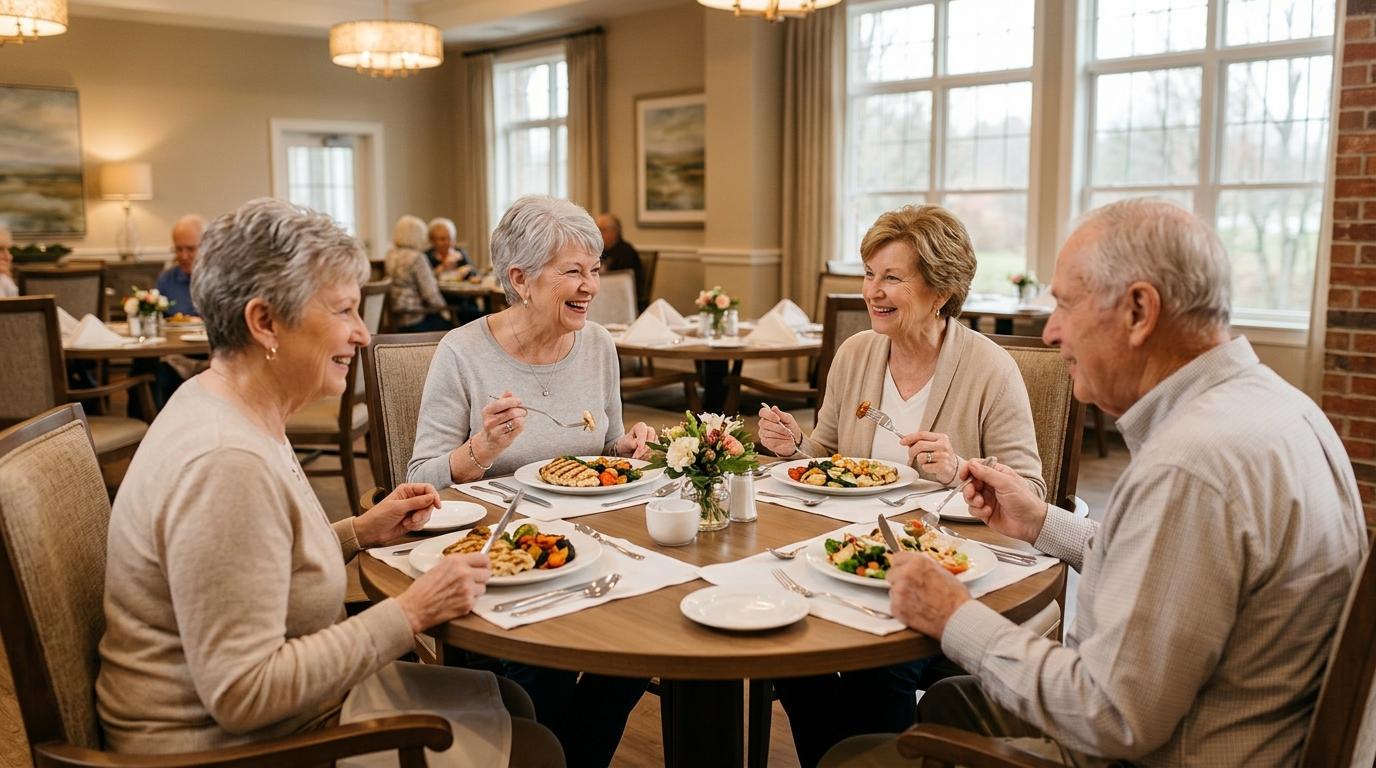
Assisted living dining at its finest looks nothing like a hospital cafeteria. A restaurant-style experience means residents are seated comfortably, served with care, and given the chance to enjoy their meal at their own pace. The atmosphere is warm and relaxed, with attentive staff who make every meal feel like an occasion worth savoring.
That sense of dignity matters deeply. Your loved one deserves to enjoy their meals in a setting that feels welcoming, not institutional, where the simple act of eating becomes something pleasant to look forward to. This approach is one of the many ways assisted living can genuinely improve the quality of life for residents each day.
Dining Support During Respite and Short-Term Care Stays
Transitioning into a new environment, even temporarily, can feel unsettling. Consistent, nourishing meals help ease that adjustment during respite and short-term care stays. Familiar routines around food bring a sense of stability when everything else is still new and unfamiliar. Respite care is designed to provide that kind of reassuring continuity from day one.
Respite residents receive the exact same attentive dining support as long-term residents. There’s no adjustment period or lesser experience. From the very first meal, your loved one is welcomed, fed well, and cared for with the same genuine warmth that the whole community is built on.
What to Look for in a Senior Living Dining Program
When you’re touring a senior care community, pay close attention to the dining experience. Look for variety and flexibility in daily meal options, a welcoming space that feels warm rather than sterile, and staff who clearly know and genuinely care about each resident they serve.
At Peregrine Senior Living at Delmar Place, dining is woven into the heart of community life. If you’d like to see it for yourself, you’re warmly invited to schedule a tour and share a meal with the team.









No more posts