

Key Takeaways
- Repeated falls can signal changes in mobility, strength, balance, or the ability to manage everyday routines safely.
- Falls can lead to injuries, reduced activity, and a growing fear of falling again.
- Changes in walking, mobility, the home environment, and daily habits can help families recognize increased fall risk.
- Assisted living can provide support with everyday routines, mobility, and activities in a more accessible environment.
- The decision to consider assisted living should account for the broader pattern of a loved one’s needs, not a single fall.
What to Do When Falls Become a Bigger Conversation
An occasional stumble can happen at any age. But when an aging parent keeps falling, the pattern deserves closer attention, particularly if their balance, mobility, or ability to manage daily tasks has also changed. At this point, most families begin worrying whether their loved one is still safe at home and what kind of support could make everyday life easier.
Repeated falls don’t automatically mean it’s time for assisted living. They can, however, be a sign that a parent’s current living situation or level of support no longer matches their needs. Looking at why falls happen, what has changed in daily life, and how frequently a loved one needs help can provide a clearer picture of what comes next.
Why Falls Are a Problem for Seniors
Falls can have consequences that extend beyond the initial injury. For older adults, a fall can affect mobility, confidence, and independence, especially when recovery makes it harder to maintain usual routines.
Repeated falls can lead to:
- Injuries and fractures
- Reduced mobility
- Fear of falling again
- Less physical and social activity
- Greater reliance on family
After a fall, some older adults become more cautious about walking, leaving home, or participating in activities they once enjoyed. These changes can gradually affect daily life and may also signal that it’s time to look more closely at their risk of falling again.
Signs a Loved One May Be at Risk of Falling
Not every change means a fall is likely. Still, looking at a loved one’s mobility, routines, and surroundings can help families identify areas where additional support may be needed.
Changes in Balance or Walking
A parent may begin walking more slowly, appearing unsteady when standing, or reaching for furniture and walls for support. They might also have more difficulty with stairs or uneven surfaces. These changes can make ordinary movement around the home more challenging.
Muscle Weakness or Reduced Mobility
Getting out of a chair, standing from bed, or walking from one room to another may take more effort than it once did. A loved one might also need more frequent breaks or assistance during everyday activities. If they’re dealing with reduced strength or mobility, they may be struggling to move throughout their day.
Difficulty Navigating the Home Safely
A home that worked well for years may become harder to manage as mobility changes. Stairs, poor lighting, loose rugs, cluttered walkways, and frequently used items stored out of easy reach can create additional hazards. Simple changes around the home can help reduce fall risks, but some older adults may eventually need a living environment that better suits their current mobility.
Changes in Daily Routines and Activity
A loved one may stop taking walks, going out, or participating in activities because they’re worried about falling. They may also begin relying on family for errands or daily tasks they previously handled independently. These changes can be particularly meaningful when they appear alongside repeated falls or growing mobility concerns.
How Assisted Living Can Help Reduce Everyday Fall Risks
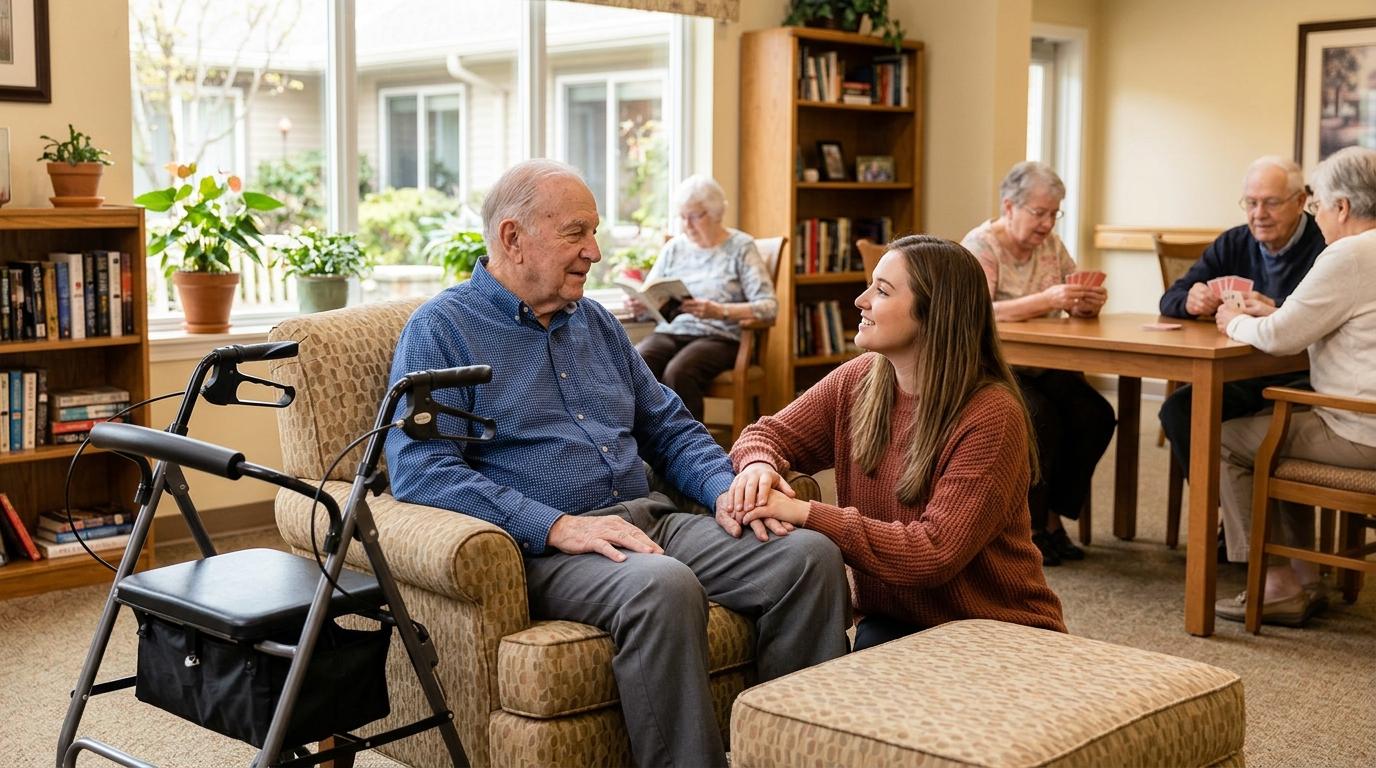
Assisted living can’t eliminate the possibility of a fall. But for older adults who need more help throughout the day, it can provide regular support and an environment designed around changing needs.
Help With Daily Routines
Assisted living residents can receive support with activities of daily living based on their individual needs. That assistance can reduce the need to struggle through tasks that have become difficult to manage alone. It also gives residents support while allowing them to continue doing what they can independently.
A More Accessible Living Environment
Moving through the day can become easier when the living environment better matches a resident’s mobility. An accessible setting can reduce some of the obstacles that make a traditional home difficult to navigate. This allows residents to focus more on their routines rather than constantly working around the limitations of their surroundings.
Support With Mobility
Some older adults need an extra hand while moving through their daily routines. Having support available can make it easier to get where they need to go without depending entirely on family members. The level of assistance can also adapt as a resident’s needs change.
Regular Opportunities to Stay Active
Staying engaged in appropriate activities gives residents opportunities to keep moving and remain connected with others. That’s why we offer residents access to Peregrine University to support continued intellectual, emotional, and social engagement as part of daily community life.
How to Tell if It’s Time for Assisted Living
One fall usually isn’t enough to determine whether a parent needs assisted living. A pattern of falls combined with other changes can provide more useful information about whether their current level of support is still working.
Families can consider questions such as:
- Are falls becoming more frequent?
- Is a parent having more difficulty moving safely around the home?
- Do they need increasing help with everyday routines?
- Have stairs or other parts of the home become difficult to navigate?
- Have they stopped participating in activities because they’re afraid of falling?
- Are family members providing more frequent help throughout the day?
- Would regular access to assistance better match their current needs?
The answers don’t create a simple cutoff point. Instead, they can show whether a loved one’s needs have gradually moved beyond what their current home and family support can comfortably provide.
Give Your Loved One the Support They Deserve
Repeated falls can be one part of a broader change in an older adult’s daily life. If falls are happening alongside reduced mobility, difficulty with everyday routines, or an increasing need for family assistance, it may be time to consider whether assisted living can provide a better level of support.
At Peregrine Senior Living at Delmar Place, we recognize that every resident has different needs, routines, and abilities. Our approach to assisted living focuses on providing personalized support while respecting what each resident can continue to do for themselves. Schedule a tour with us at Delmar Place today to learn more about assisted living for your loved one.









No more posts